Ignorer et passer au contenu

Most families arrive at the urn selection conversation with little context and considerable grief. They may not know that a single full-capacity urn is not their only option, or that keepsake urns for ashes exist precisely to serve families who want to share a loved one's remains across multiple households. As a funeral professional, you are often the only person positioned to clarify those options before a family makes a choice they cannot easily revisit.
This guide provides a practical framework for navigating that conversation with confidence. You will find a three-part decision model built around family size, distribution wishes, and budget; a scenario-based decision tree you can apply in real time; capacity guidance to eliminate guesswork; and compassionate language recommendations for introducing the full-urn versus keepsake-set distinction without overwhelming a family in an already difficult moment. The goal is not to expand a product catalogue but to give you the vocabulary and criteria to serve each family's specific situation well, in a single, well-structured conversation.
Why the Urn vs. Keepsake Decision Deserves Its Own Conversation
The question of which memorial vessel to choose carries weight beyond a single household. The decision carries weight beyond one person. A single cremation urn serves one household, but grief rarely stays in one place. Adult children in different cities, a sibling living across the country, a close friend who was family in every sense, each of these people may want a way to keep the person they loved close. That possibility deserves to be named early, not discovered later.
Funeral professionals who raise this conversation intentionally, rather than leaving families to navigate it alone afterward, reduce the risk of regret. A family that learns about high-quality cremation urns, keepsakes and jewellery for ashes six months after arrangements are finalized may wish they had known sooner. The conversation costs very little to have; the absence of it can cost families a great deal.
Framing choices in plain language, at the right moment, also respects how grief actually affects thinking. Grief naturally narrows focus, and presenting choices clearly and early lightens that load rather than adding to it.
Perhaps most importantly: this conversation is not about selling an upgrade. It is about ensuring families understand what is possible so they can choose what is right. That distinction shapes everything, the words used, the pace kept, and the trust built.

Understanding the Two Paths: Full Urns and Keepsake Sets
Before professionals can guide families confidently, they need a clear picture of what each option actually is and what it is designed to do.
A full-capacity cremation urn holds all of an adult's ashes, typically between 200 and 250 cubic inches for an average adult. It functions as the primary, permanent memorial vessel, whether kept at home, placed in a columbarium niche, or used in a burial. This is the option most families picture when the word "urn" is first mentioned.
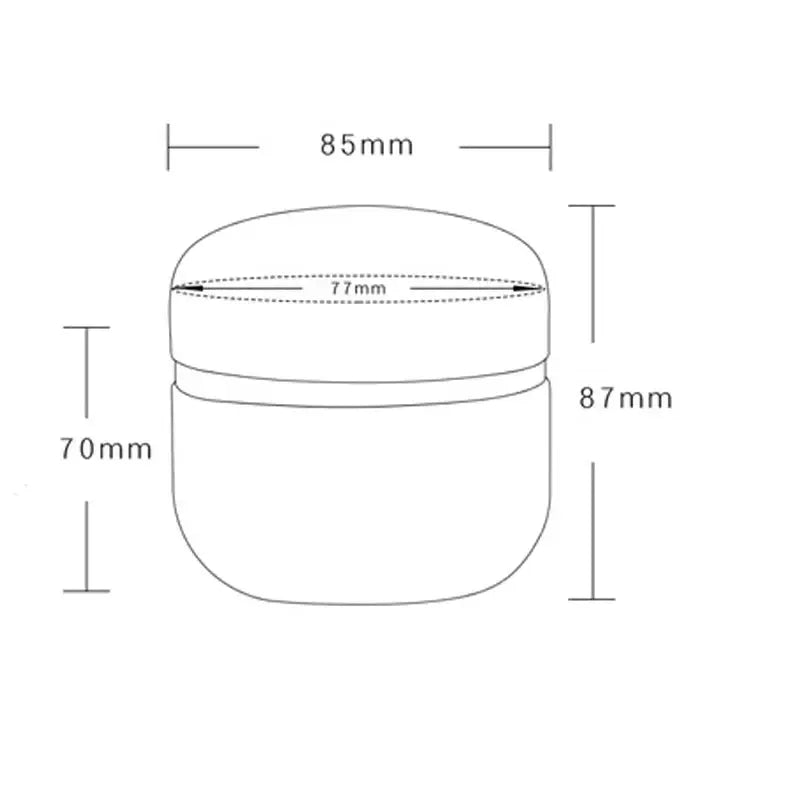
Keepsake urns for ashes are smaller vessels designed for a portion of the ashes. They hold a meaningful portion rather than the full volume, allowing several family members to each maintain a physical connection to the person they have lost. A gorgeous pet or keepsake cremation urn illustrates how compact, beautifully crafted vessels can carry genuine memorial significance despite their smaller scale.
A keepsake set typically combines several small keepsake ashes urns, sometimes alongside cremation jewellery, so that ashes can be divided meaningfully across family members or locations.
One distinction families often miss: the temporary container provided by the crematorium is not designed for long-term display, columbarium placement, or multi-generational keeping. It is a practical holding vessel, not a permanent memorial.
Neither a full urn nor a keepsake set is obligatory. Some families scatter all ashes and keep only a symbolic portion in a keepsake; others prefer a single vessel as their sole memorial focus. Both are equally valid.
Material choice follows intended use at every scale. Metals, ceramics, and stone suit permanent display or columbarium storage. Biodegradable materials serve burial or water scattering. Keepsake urns follow precisely the same logic, just in a smaller form.
The Three-Part Decision Framework: Family Size, Distribution Wishes, and Budget
Once the two paths are clear, three practical variables narrow the choice quickly and without adding pressure to an already difficult conversation.
Family size is often the most telling signal. A sole surviving partner with no children or siblings generally has one person to consider, making a single full-capacity cremation urn the most straightforward fit. A large family spread across multiple states, or with relatives in different parts of the country, points toward a keepsake set or a combined approach, where each person can hold something meaningful without coordinating a shared vessel.
Ash distribution wishes shape the vessel structure directly. Families who want to scatter a portion at a meaningful location while keeping a remainder at home need a split approach: a primary urn for ashes retained at home, paired with one or more keepsake urns for ashes that can be divided among family members or used alongside a scattering. A single vessel cannot serve both purposes.
Budget works differently than families often expect. A full-capacity human urn for ashes is typically one purchase. A keepsake set involves multiple smaller pieces, which may cost more in total, but allows the expense to be shared. When adult siblings each wish to hold a portion, each can purchase their own keepsake ashes urn independently, distributing both the cost and the sense of ownership.
None of these questions need to be answered at once. Walk through each variable in sequence, pausing wherever a family needs a moment. Choosing an ashes urn can be a daunting process, and having support makes a genuine difference. Note responses informally as the conversation progresses. That record reduces the chance of a family leaving without a clear direction, and gives you a reliable reference point if they return with questions.
Decision Tree: Matching Common Family Scenarios to the Right Approach
Those three variables narrow the field. These five scenarios translate them into direct recommendations.
Scenario 1: Sole surviving partner, no distribution wishes, moderate budget. A single full-capacity cremation urn is the clear choice. Select a durable, display-appropriate material, such as metal, ceramic, or stone, suited to wherever the family intends to keep it long term.
Scenario 2: Adult children in multiple locations, all wanting a physical memorial. Recommend a keepsake set with one keepsake urn per sibling. If the family also wants a central memorial in one household, add a full-capacity urn alongside the keepsake set.
Scenario 3: Family wishes to scatter ashes but wants something physical at home. A biodegradable urn handles the scattering portion respectfully. One or more keepsake urns for ashes retained at home give family members a permanent, tangible memorial.
Scenario 4: Limited budget, large family. Keepsake urns for ashes carry a lower individual price point than full urns. Each family member can purchase their own, distributing the cost and removing the burden from a single person.
Scenario 5: Family is undecided or overwhelmed. There is no obligation to choose immediately. The temporary container from the crematorium provides a holding option while the family takes time to decide, giving them space to reach a decision when the sharpest weight of grief has eased slightly.
Most families will recognize elements of more than one scenario. The framework is a guide, not a checklist. Blended approaches, a full urn paired with keepsakes, or a biodegradable vessel alongside cremation jewellery, are often the most personally meaningful outcomes.
Capacity Guidance Every Funeral Professional Should Know
Once the right scenario comes into focus, the next practical question families often ask is simple: will there be enough? A few baseline figures give professionals the confidence to answer that clearly.
A standard adult cremation typically yields between 200 and 250 cubic inches of ashes, following the Cremation Association of North America's general guideline of approximately one cubic inch per pound of body weight. That single figure is the most useful reference point in any capacity conversation.
Keepsake urns for ashes vary widely in size, from small symbolic pieces to vessels holding a substantial portion of ashes. A family of four adult children each with a larger keepsake could use a significant share of the total volume, leaving room for a full urn or additional smaller pieces, including compact options like a pet or keepsake ashes cremation urn chosen for its size and simplicity.
Cremation jewellery holds only a nominal, symbolic amount. It is a symbolic choice, not a volumetric one, and families almost always select it alongside a full or keepsake urn rather than as a replacement.
When families ask about dividing ashes, reassure them that the process is straightforward and does not diminish the memorial significance of any portion. It can be done carefully at home or with professional assistance, depending on family preference.
Regulations governing ash division, transport, and scattering differ by state. Professionals should know their own state's requirements and be ready to direct families to their state health department or local cremation association for formal guidance.
In the moment, exact calculations are rarely necessary. Letting families know that standard keepsake sets are designed to accommodate typical ash volumes is usually enough to ease concern and keep the conversation moving forward.
How to Introduce the Options: Compassionate Language for a Difficult Moment
Lead with permission, not a menu. A simple opener such as "There are a couple of different ways families approach this, and I can walk you through them whenever you are ready" returns control to the family. It signals that no decision is expected immediately and that you are there to guide rather than present.
Language matters as much as information. Phrases like "upgrading your urn" or "purchasing a keepsake package" can feel transactional at a moment that is anything but. Anchor your words in relationship and remembrance instead. "Some families find it meaningful for each person to have their own way of keeping [name] close" communicates the same practical option without reducing it to a product choice.
When raising the possibility of a keepsake urn for ashes, frame it as honoring both togetherness and individual grief. For families spread across different states or countries, this framing often lands immediately and with relief.
Read the room continuously. Short answers, long pauses, and visible distress are signals to slow down, not push forward. Acknowledge the weight of the moment directly: "There is no rush on any of this, and you can always come back to it." That single sentence does more to build trust than any amount of product detail.
Limit yourself to two or three options at most. Presenting every available scenario is not thoroughness; in grief, it is an obstacle. Narrowing the choice to the most relevant two is a genuine service.
Close with a calm, low-pressure summary: "Based on what you have shared, it sounds like [option] might suit your family best. But this is entirely your decision, and there is no wrong choice here."
Pointing Families Toward Quality: What to Look for in Urns and Keepsake Sets
Once the conversation with a family is complete, the next step is helping them find the right product with confidence.
Funeral professionals do not need to carry every option in-house. Directing families toward reputable suppliers is a genuine service, provided those suppliers offer clear specifications: explicit cubic-inch capacity listings, material descriptions, secure closure details, and notes on suitability for columbarium placement or burial. These details matter, and their presence signals a supplier that takes quality seriously.
For keepsake sets, one additional check is worth making: confirm that the vessels within the set are visually cohesive. When siblings or partners each hold a keepsake ashes urn, matching or complementary designs create a sense of shared remembrance rather than a collection of unrelated objects.
Online suppliers such as Remembrance Haven offer full-capacity human urns for ashes, keepsake urns for ashes, and cremation jewellery, all with sizing guidance and worldwide shipping. Browsing from home, at their own pace, allows families to make a thoughtful final choice without the time pressure of an in-person appointment.
A short take-home checklist helps families stay focused after they leave. Suggest they consider four things: preferred material, required capacity, intended display location, and whether multiple family members each want their own vessel.
Finally, personalised and artisan options are worth a brief mention, even if not immediately relevant. Engraved or custom-designed urns are often requested by families who want the memorial vessel to reflect something specific about the person they have lost. Planting the idea early means families know the option exists when they are ready to explore it.
A Framework That Serves Families and Professionals Equally
Providing families with quality product guidance is one part of the professional's role. The deeper value lies in how the entire conversation is held.
The choice between a full cremation urn and a keepsake set rarely resolves itself when families navigate it alone. FAMIC research confirms that 66 percent of adults over 40 rely on funeral professionals as their primary source of memorial merchandise guidance, meaning the framework a professional brings directly shapes the decisions families make. Structured support reduces anxiety; its absence leaves families second-guessing choices long after arrangements are complete.
The three-part framework covered here requires no special tools and adapts to the full range of family circumstances a professional will encounter.
Compassionate, unhurried language is not incidental to this process. It is the mechanism by which grieving families can access the practical guidance they need. Professionals who model this register become trusted advisors in their communities, not simply product facilitators. That distinction matters for long-term professional reputation and for the families served.
For professionals who want a calm starting point to share with families after the arrangement conversation, choosing an ashes urn can be a daunting process, and there is guidance available to help.
The goal was never to reach a perfect decision in the room. It was always to leave every family feeling informed, respected, and ready to choose a memorial that truly honours the person they have lost.
Conclusion
The families you serve deserve structured, compassionate guidance during one of the most emotionally demanding decisions they will face. The framework covered in this guide, grounded in family size, distribution wishes, and budget, equips professionals to hold that conversation with confidence.
Your role as a trusted advisor begins the moment you introduce these options with care and clarity. Review your current arrangement process and identify where this framework fits naturally. Share reliable resources with families who need more time to reflect after the appointment.
Every family that leaves your care feeling informed and respected carries that experience forward. That is the standard worth working toward, and it starts with the very next conversation you have.